Who Invented Mahjong? Five Suspects and One Very Patient Sailor
A philosopher, a port official, two brothers, an army camp and a Shanghai noble all get the credit. The honest answer is stranger than any of them.
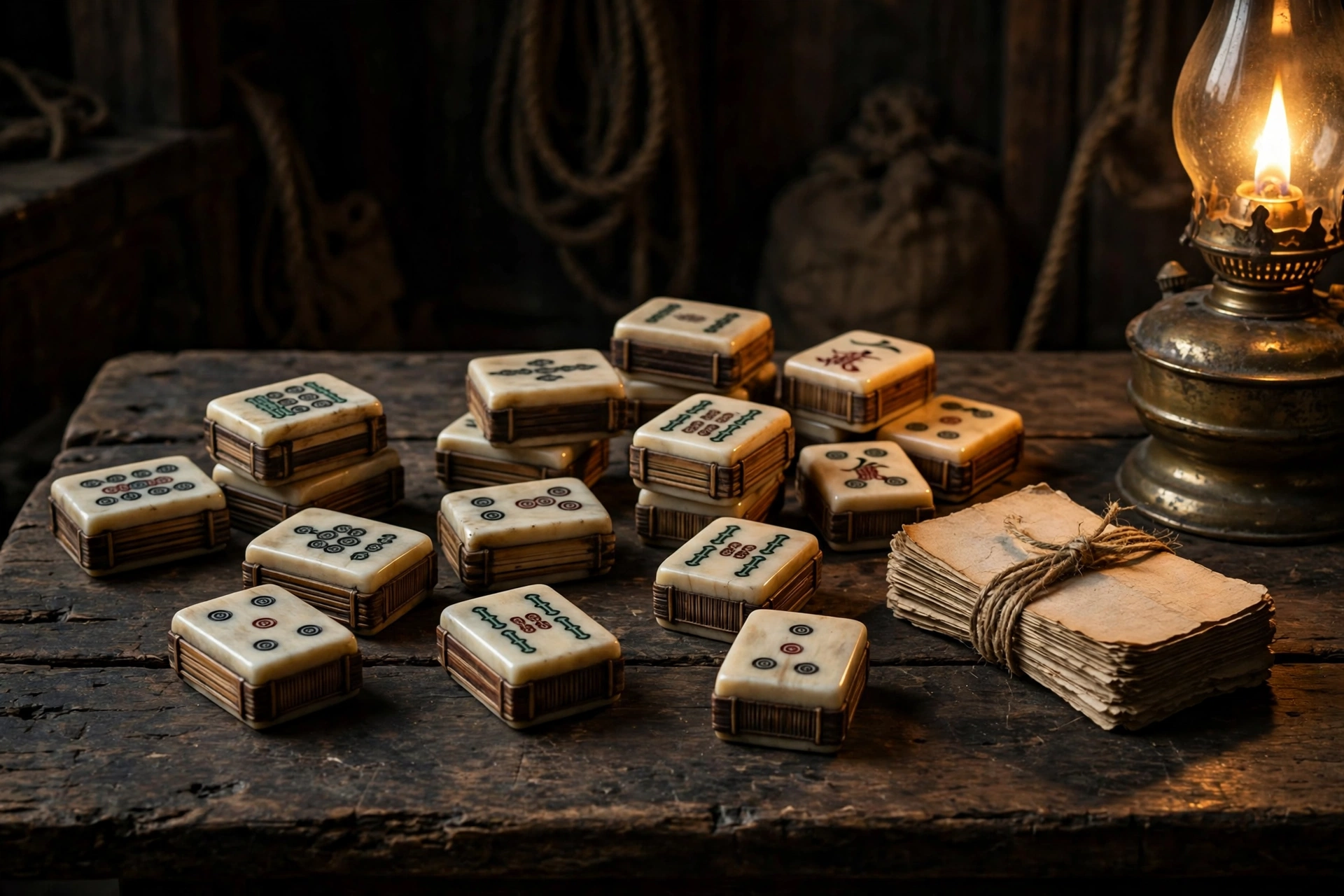
Ask where mahjong came from and someone will tell you Confucius invented it around 500 BC. It is a wonderful story: the three dragon tiles stand for his cardinal virtues, and the game's name (sparrow, in the old rendering) honours his love of birds. It is also, as far as any historian can find, completely made up. There is no evidence of mahjong existing before the 19th century, and the Confucius story seems to have been polished up later, largely because "ancient Chinese game" sold sets.
The card games that came first
What mahjong actually descends from is paper. Ming-dynasty card games like Yezi ("leaf") and Madiào were played with money-suited cards: coins, strings of coins, and ten-thousands of strings. Their descendant Peng He Pai carried three suits in repeated sets — and when the cards became tiles, the suits simply changed costume: coins became dots, strings of coins became bamboos, and the ten-thousand suit became the characters American players call "craks." Most of a mahjong tile is a playing card that put on weight.
Suspect one: Chen Yumen of Ningbo
The best-documented candidate is Chen Yumen, a Qing-dynasty official from the port city of Ningbo, in the Taiping Rebellion era of the 1850s and 1860s. He is credited with adding the red dragon tile and the winds to the old card game, and with the most practical innovation of all: having the cards carved as bone-and-bamboo tiles because, the story goes, a sailor's paper deck kept blowing into the sea. Chen spoke English, and in 1861 he taught the game to the British consul F. E. B. Harvey — whose letters home are among the earliest written records of mahjong anywhere.
Suspects two through five
Chen has rivals. One tradition credits two brothers in Ningbo around 1850, adapting Madiào on their own. Another says Taiping army officers invented it to pass camp time. A fourth theory gives it to a Shanghai-area noble between 1870 and 1875. And a colleague of Chen's, Chang Shiu-Mo, is sometimes credited with adding the flowers and seasons. The rivals cannot all be right, and the surviving evidence, early tile sets dated to roughly 1868–1876, does not quite match any modern set: the game was still mutating in the box.
The honest verdict
Mahjong almost certainly has no single inventor. It precipitated out of a family of card games in one port city over a few decades, with Chen Yumen as the most plausible single contributor and the Confucius story as marketing invented after the fact. That is less romantic than a philosopher at a tile wall, but it explains the thing players notice today: a game born by committee, in a port, was always going to splinter into local versions the moment it travelled. Which is exactly what happened next.
Put the story to use
However it started, the tiles changed less than the rules did. Compare the three big modern games in American vs Chinese vs Riichi, or browse the sets we stock guides for.
Sources and notes: Yale Review of International Studies, 'On the Advent and Spread of the Game Mah-Jong' (card lineage, Chen Yumen, Harvey 1861); Mahjong Museum and researcher accounts via Michael Stanwick and Tom Sloper (early sets c. 1868–1876); the Confucius legend as recorded in Wikipedia's mahjong history and flagged there as apocryphal. Competing inventor claims are presented as traditions, not settled fact.
More stories
One Game, Forty Faces: How Mahjong Split Into the Styles Played Today
American jokers, Japanese dora, Taiwanese sixteen-tile hands, Singaporean animals: there was never a rulebook authority, so every port city wrote its own.
Mahjong's First Boom: America Went Mad for Tiles in the 1920s
Twelve thousand sets at Abercrombie & Fitch, cattle bone shipped to Shanghai, songs on the radio. The current mahjong boom is a rerun; the first one was wilder.
The Biggest Prize Ever Won at Mahjong (Is Smaller Than You Think)
No million-dollar mahjong payday exists. The richest verified prize in the game is about $330,000, and it went to a team of four in Tokyo. Here's why mahjong money works differently.
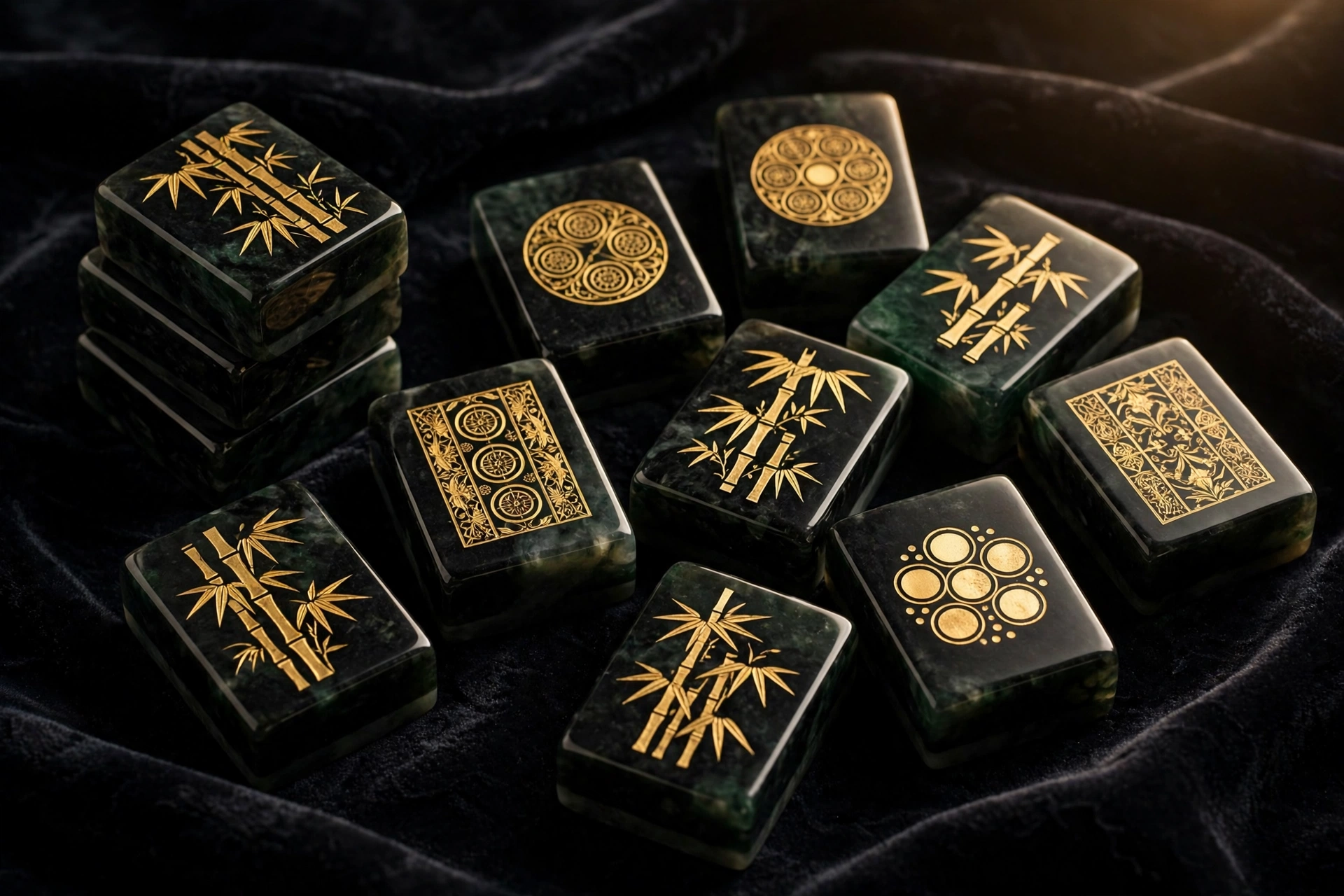
The $1.888 Million Mahjong Set, and What 'Expensive' Really Means
A one-of-one jadeite set in Singapore just reset the ceiling. Meanwhile a genuine 19th-century set might cost less than dinner. Both stories are true.
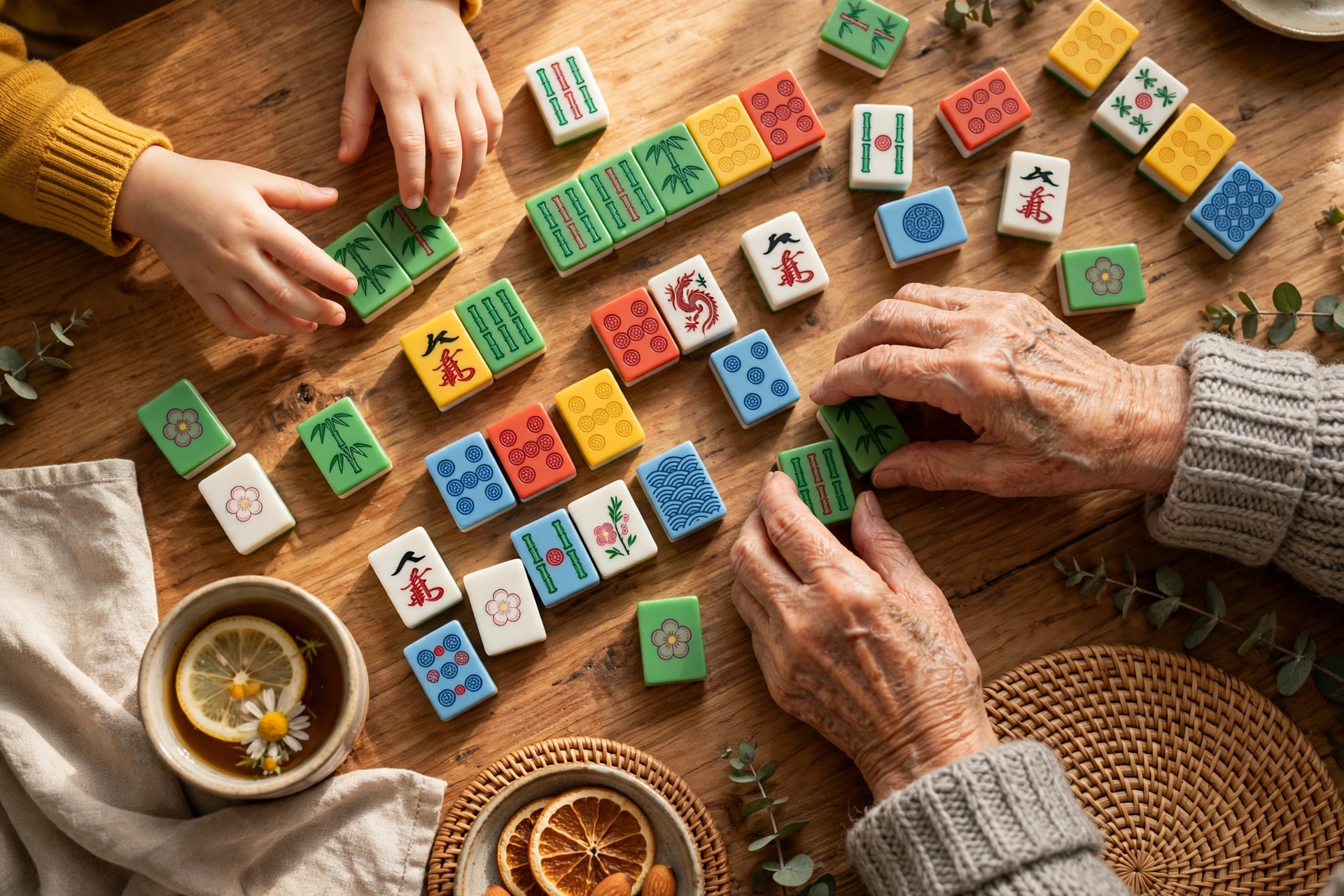
Mahjong for Kids: Start at Three, Play for Real by Eight
Too complex for children is the myth. Leveled properly, mahjong is a memory gym, a maths lesson and the rare game grandparents and grandkids play as equals.